Digitization of the Prague astronomical clock
Interactive 3D visualization
The 3D scene requires a high-performance graphics adapter and approximately 250MB of data will be downloaded.
The Prague astronomical clock, which has been setting the pace in Prague for centuries, now also has a digital twin. A detailed 3D kinematic model of all parts of the astronomical clock, created by CESNET, provides insight into its functioning.
How a machine with thousands of parts was digitized
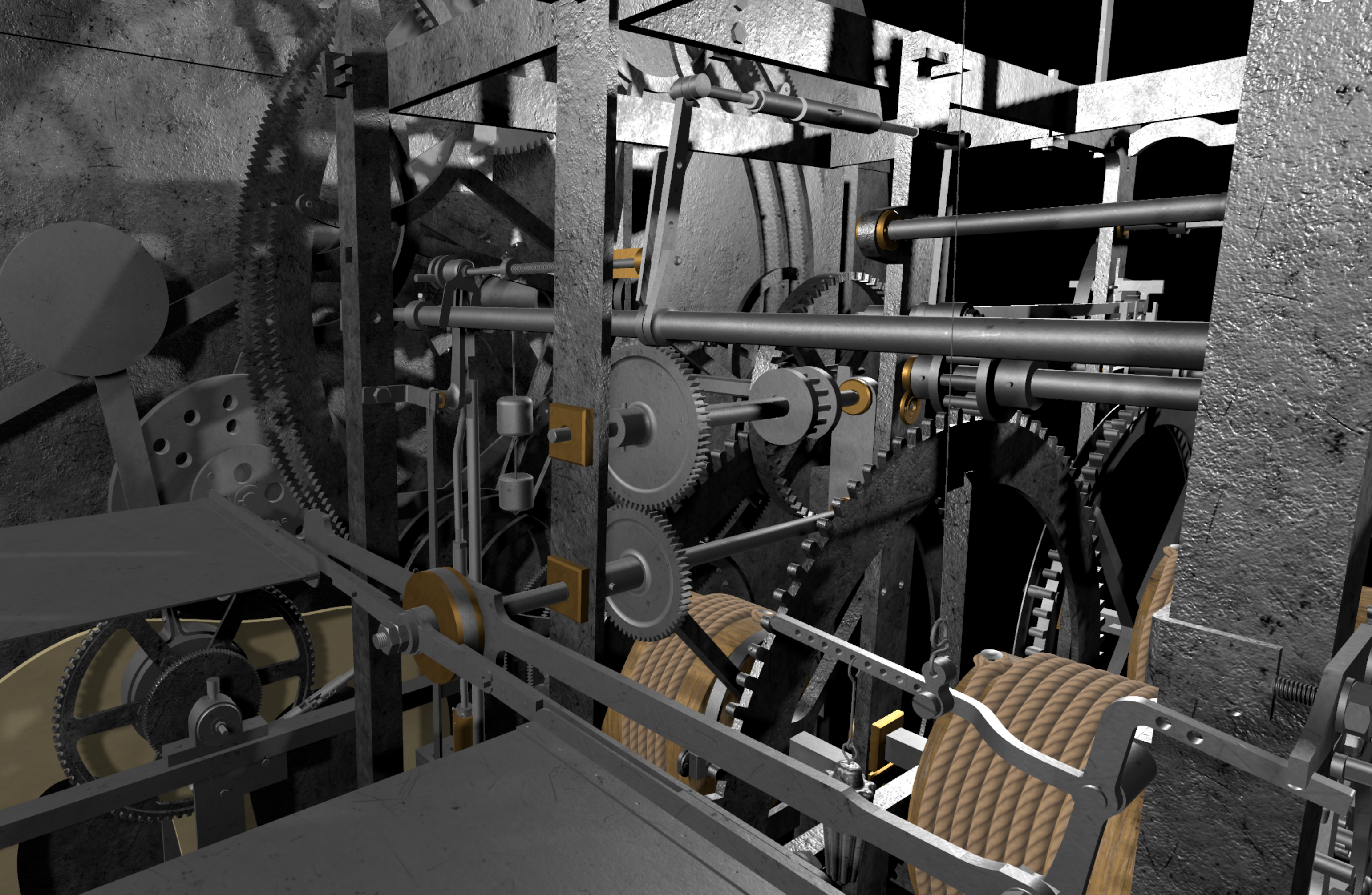
Digitizing the entire mechanism was a major challenge. The clockwork consists of more than 750 main parts, and if we count even the smallest ones, their number exceeds a thousand. Since it was not possible to disassemble the clock mechanism, another approach was needed, combining several methods. We used photogrammetry with a periscopic lens, manual modeling based on historical drawings and measurements of the physical clockwork, and procedural generation of repetitive parts. Part of the clockwork photogrammetry scanning had to be done at night when the machine could be temporarily stopped.
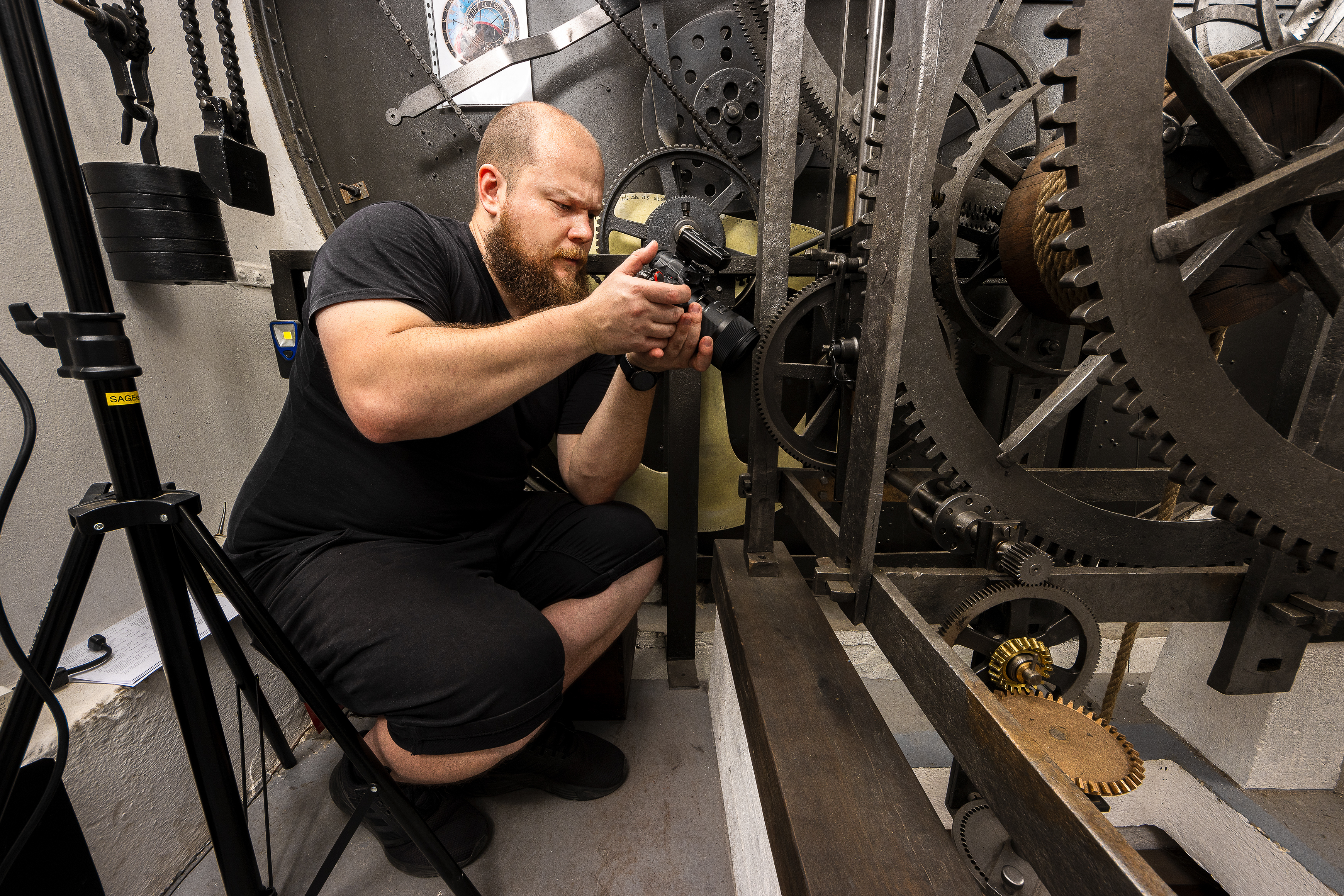
The model's accuracy was also ensured by the clockmaster, the academic sculptor Petr Skála, who provided expert assistance with scanning the astronomical clock. The resulting 3D model allows users to observe the movement of the astrolabe and clockwork not only in real time, but also in fast motion. It can be set to a specific date and time.
Team collaboration
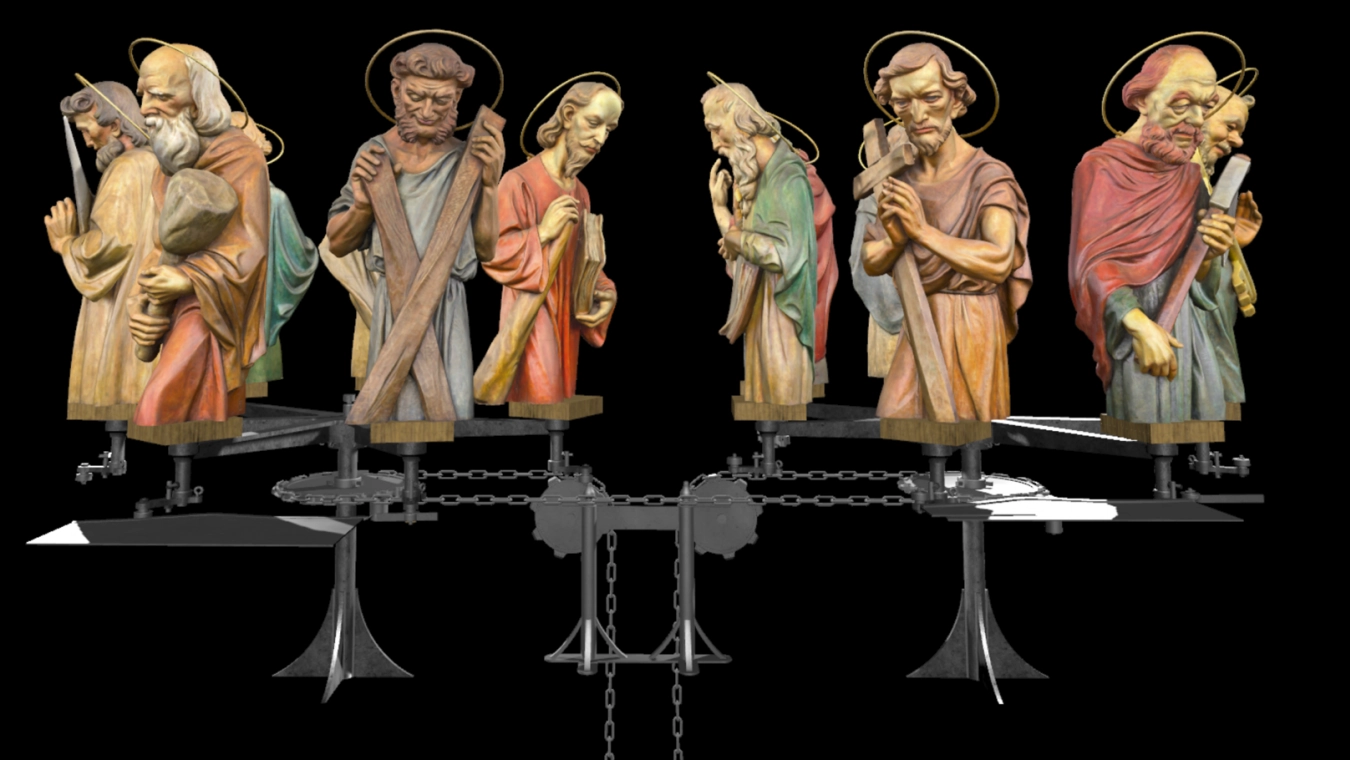
The digitization project has been done in collaboration of experts from three institutions - the CESNET association, Prague City Tourism, and the st.dio company. CESNET has created the digital model of the astronomical clock consisting of the main machine, the chronometer of Romuald Bozek, the astrolabe, the apostles, the winding system, and the calendar plate. A fully kinematic 3D model captures the movement of all parts of the astronomical clock in real time.
Prague City Tourism conducted archival research of historical sources, provided the expert supervision of the clockmaster, and organized an exhibition where the digital model is presented to the public. One of Prague's most famous symbols is now presented in a completely new way. The st.dio company, together with CESNET, has implemented the visualization part – an interactive web application and an information kiosk for the exhibition.
Virtual presentation and exhibition
The digital astronomical clock is presented in two forms. The web application allows viewing a detailed model of the astronomical clock from anywhere in the world. Users can zoom in on individual parts, compare the current and historical states, and see accompanying information about the history and function of the astronomical clock. The information kiosk at the exhibition offers an interactive projection with touch control. The presentation realistic and smooth animation of movement.
Significance of the project
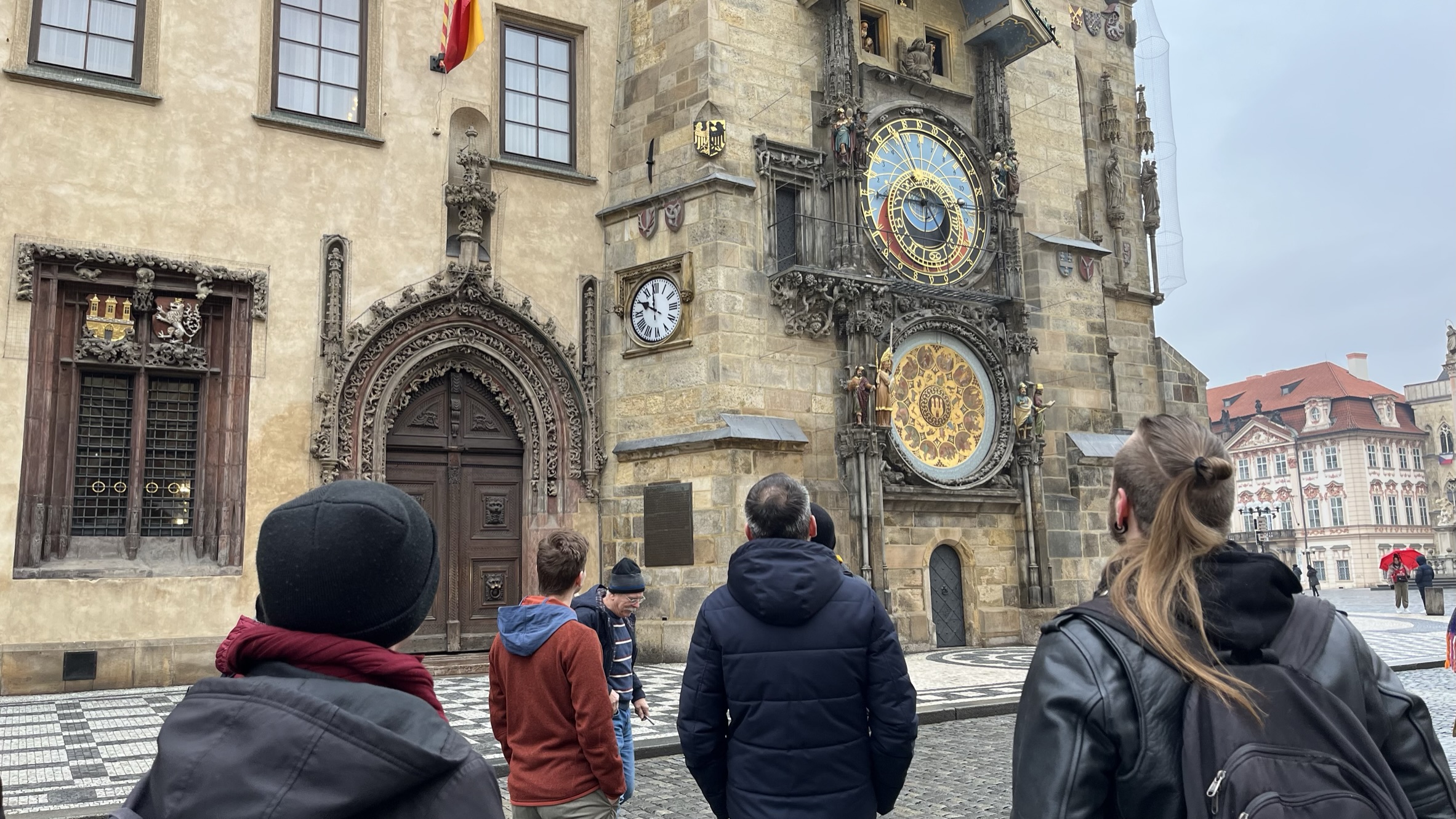
This medieval technical monument is the oldest functioning astronomical clock still powered by its original clockwork mechanism. It was created in the early 15th century by clockmaker Mikuláš of Kadaň in collaboration with astronomer Jan Šindel. Although it is one of Prague's most visited treasures, few people understand how it actually works. The digital model, therefore, offers a unique opportunity to find out.
The digitization project extends far beyond the model itself. The data will serve as valuable technical documentation. We proposed and verified procedures and technologies that can be used for the digitization of other historical clock mechanisms and technical monuments.
This project also attracted attention at the international conference Digital Heritage 2025 in Siena, Italy, where it was presented by Jiří Kubišta.
*The Digitization of the Prague astronomical clock project (TQ030002900) was supported by the Technology Agency of the Czech Republic as part of the SIGMA program.
Want to know more?
Technology used in digitizing the astronomical clock in a nutshell
- Photogrammetry with a periscopic lens
Photogrammetry converts a series of photographs into a three-dimensional model. A periscopic lens allowed us to capture even hard-to-reach places deep inside the clockwork, including the color and texture of the objects. To successfully convert the photographs into a 3D model, it was necessary to temporarily stop the moving clockwork.

- Manual modeling based on historical plans
Some parts could not be accurately scanned. These parts have been modelled manually based on historical drawings. Romuald Božek described the astronomical clock in the 19th century, and Václav Heisler then created detailed technical plans during its repairs in the 20th century. These documents were used to understand the dimensions and relationships of many components. However, there were a number of inaccuracies in the historical drawings. It was necessary to complement them with precise measurements of the clockwork, studying historical photographs, literature, and obtaining valuable information from the clockmaster, academic sculptor Petr Skála. - Procedural generation
This involves automatically creating model parts according to specified parameters, such as size or shape. This method was suitable for some repetitive elements, such as gear cogs.
Terminology: Do you know the individual parts of the astronomical clock?
- Apostles
Twelve wooden figures appear every hour in the window niches above the dial. They are a symbol of faith and craftsmanship that has accompanied the Prague astronomical clock for centuries. - Astrolabe
It shows the movement of the Sun and Moon across the sky, the signs of the zodiac, and the time in several different systems. It is the heart of the astronomical clock – combining the functions of a clock, calendar, and astronomical instrument

- Božek's chronometer
A mechanism constructed by Czech clockmaker Romuald Božek during the so-called major repair of the astronomical clock in the 19th century. It ensures more accurate operation of the clockwork and stabilizes its mechanism. - Calendar Plate
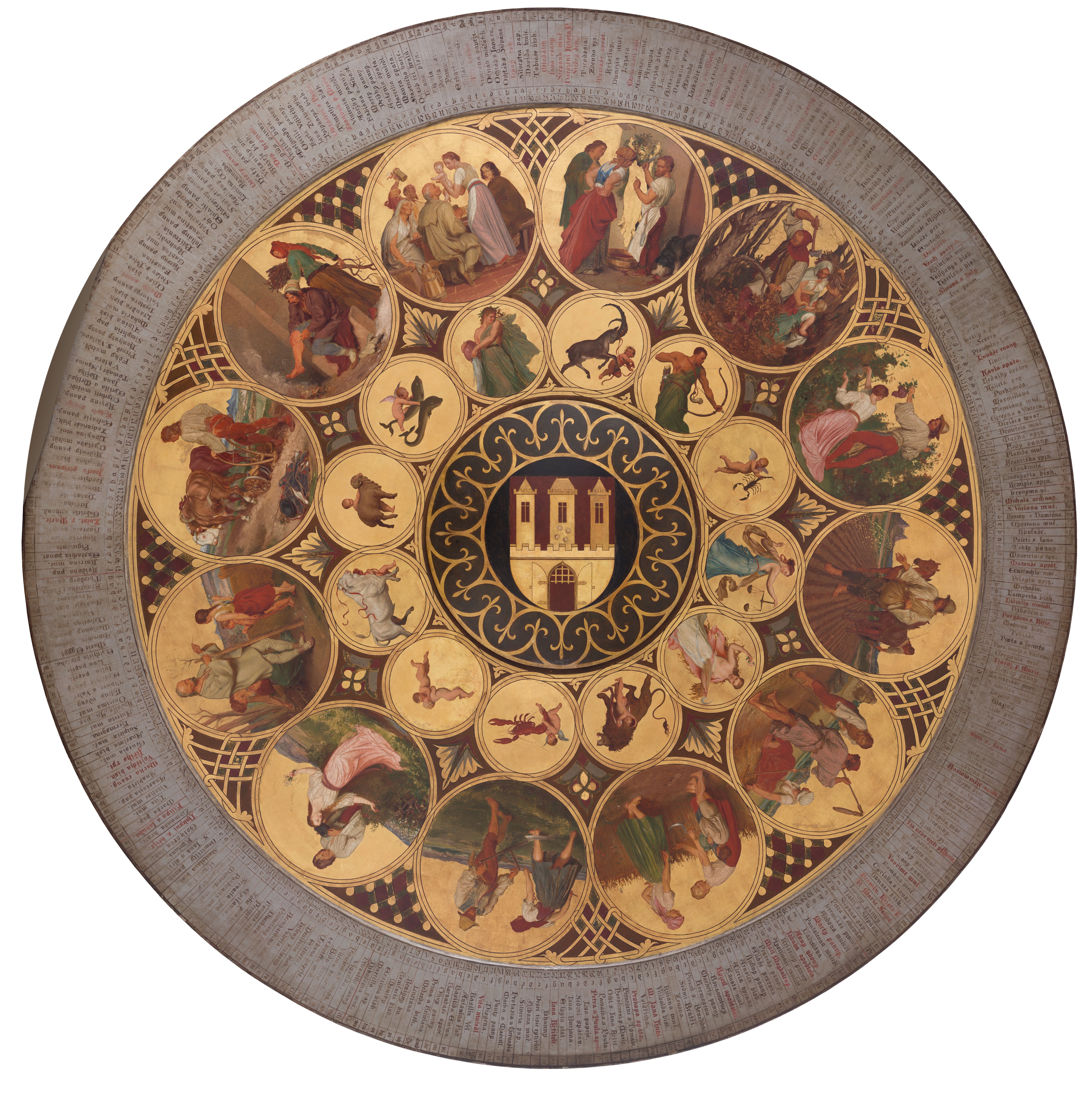
The lower circle of the astronomical clock displays the months, holidays, and signs of the zodiac, supplemented by allegories of the seasons and rural work. Its current form was created by painter Josef Mánes in 1866. The model depicts the original, which is stored in the Prague Museum, while a copy is located in the Old Town Hall.
Article: Prague Astronomical Clock - Virtual Presentation
More about the digitization project can be found in the scientific article: Prague Astronomical Clock - Virtual Presentation.